
Every cell in the body contains a molecular clock — a transcription-translation feedback loop driven by CLOCK, BMAL1, PER, and CRY genes. These clocks synchronise to the 24-hour light-dark cycle and orchestrate the timing of virtually every physiological process, from cortisol secretion to DNA repair. Circadian disruption is now classified as a Group 2A carcinogen by the IARC.
The Molecular Clock Mechanism
The master circadian pacemaker resides in the suprachiasmatic nucleus (SCN) of the hypothalamus and is entrained primarily by light via intrinsically photosensitive retinal ganglion cells (ipRGCs) containing melanopsin. The molecular clock operates through a 24-hour transcription-translation feedback loop: CLOCK:BMAL1 heterodimers activate PER and CRY gene transcription; PER:CRY complexes then inhibit CLOCK:BMAL1, creating the oscillation.

Circadian Regulation of Physiology
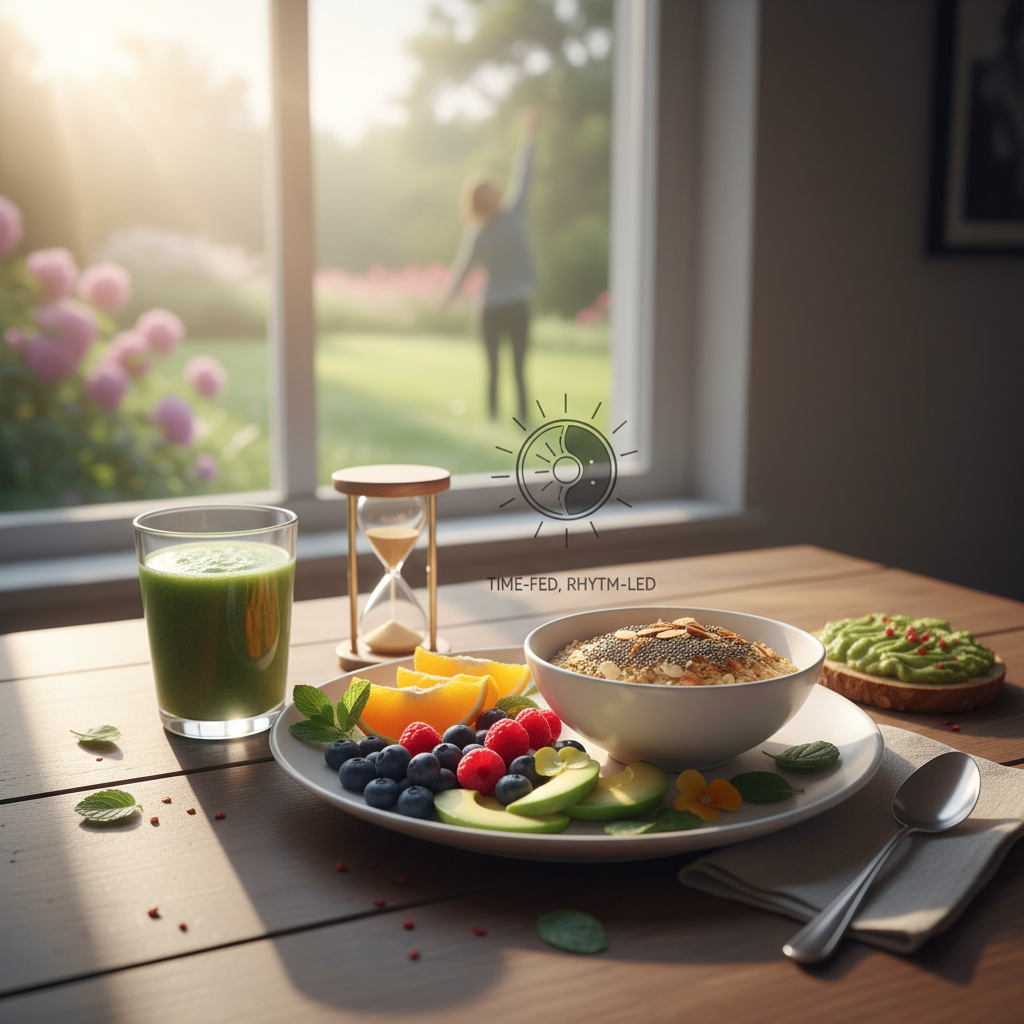
Circadian timing governs cortisol (peaks at dawn), melatonin (peaks at 2–3am), insulin sensitivity (highest in the morning), immune activity (NK cell activity peaks at night), DNA repair (primarily nocturnal), and body temperature (nadir at 4am). Time-restricted eating (TRE) aligned with circadian rhythms — eating within an 8–10 hour window earlier in the day — improves metabolic health, reduces inflammation, and extends healthspan in multiple model organisms.
Consequences of Circadian Disruption
Shift work, social jetlag, artificial light at night (ALAN), and irregular meal timing all disrupt circadian alignment. Consequences include increased risk of metabolic syndrome, type 2 diabetes, cardiovascular disease, depression, immune dysregulation, and cancer. Even a single night of sleep disruption impairs insulin sensitivity by 25% and elevates inflammatory cytokines.
- Cortisol awakening response (CAR) — reflects HPA axis circadian function
- Melatonin (DLMO) — dim-light melatonin onset measures circadian phase
- Core body temperature rhythm — reliable marker of circadian timing
- Actigraphy — wrist-worn device measuring rest-activity cycles
- Clock gene expression — emerging liquid biopsy circadian biomarkers
Key Takeaways
- 01Every cell contains a molecular clock driven by CLOCK, BMAL1, PER, and CRY genes
- 02Circadian disruption is classified as a Group 2A carcinogen by the IARC
- 03Time-restricted eating aligned with morning light improves metabolic health
- 04Melatonin DLMO and cortisol awakening response are key circadian biomarkers