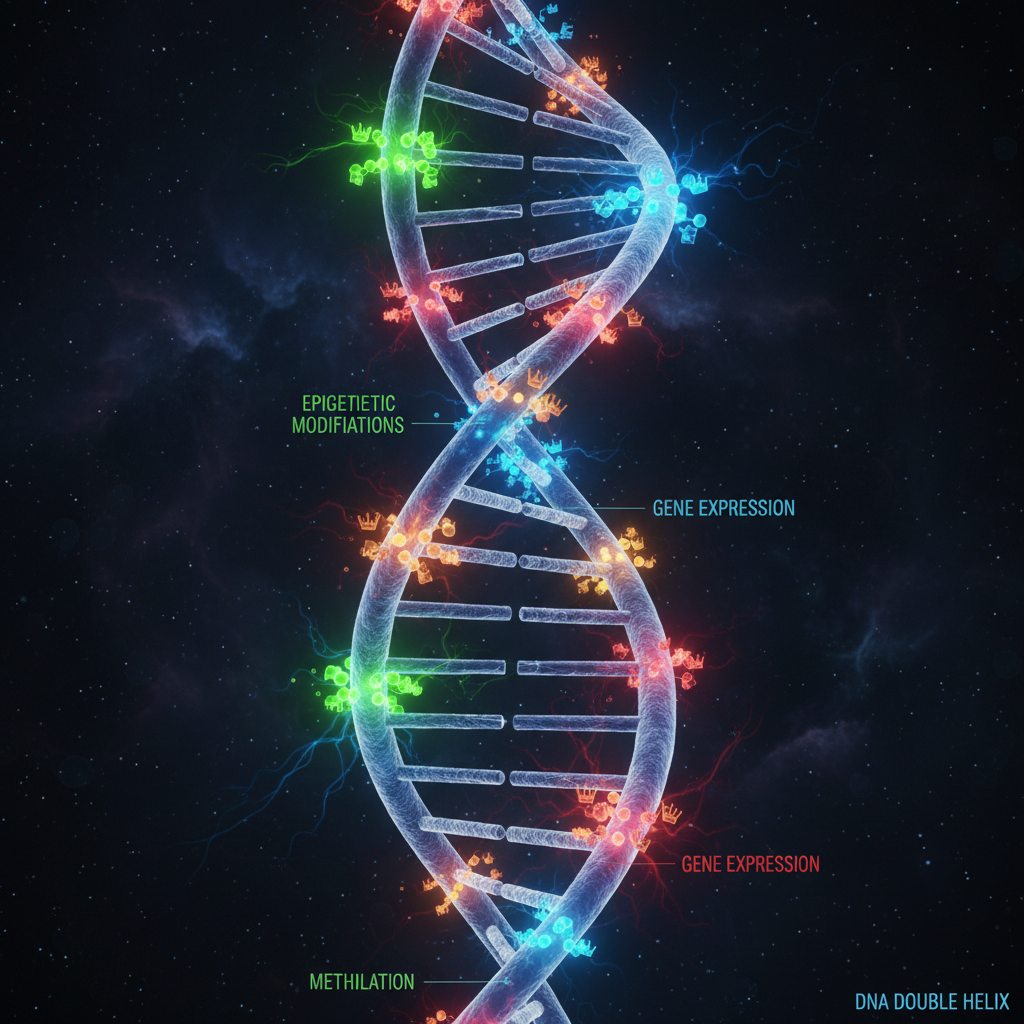
Epigenetics describes heritable changes in gene expression that occur without alterations to the underlying DNA sequence. Your genome is fixed at birth — but your epigenome is dynamic, responding to diet, stress, toxins, exercise, and even ancestral experiences. Epigenetic clocks are now the most accurate measures of biological age available.
Mechanisms of Epigenetic Regulation
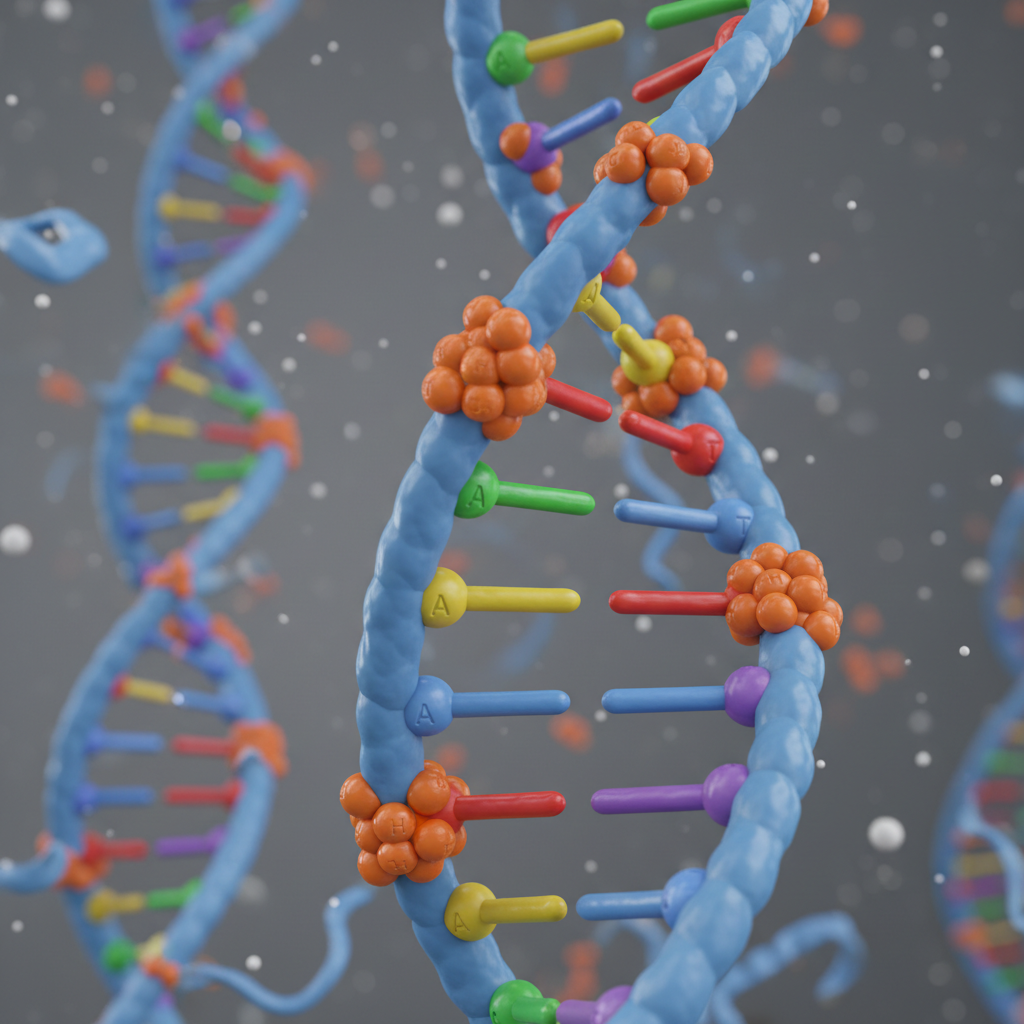
The three primary epigenetic mechanisms are DNA methylation (addition of methyl groups to cytosine residues, typically silencing gene expression), histone modification (acetylation, methylation, phosphorylation of histone proteins altering chromatin accessibility), and non-coding RNA regulation (miRNAs and lncRNAs modulating mRNA stability and translation). These mechanisms interact dynamically to create a complex regulatory landscape that determines which genes are expressed in each cell type.
Epigenetic Clocks and Biological Age
Epigenetic clocks (Horvath, Hannum, PhenoAge, GrimAge, DunedinPACE) use DNA methylation patterns at specific CpG sites to calculate biological age with remarkable accuracy. GrimAge and DunedinPACE are the most predictive of healthspan and lifespan. Biological age can diverge significantly from chronological age — and crucially, it is modifiable. Studies show that intensive lifestyle interventions (diet, exercise, stress reduction, targeted supplementation) can reduce epigenetic age by 3–5 years within 8 weeks.

Transgenerational Epigenetic Inheritance
Epigenetic marks can be transmitted across generations — a phenomenon with profound implications for ancestral health science. Studies in humans and animal models show that parental and grandparental experiences (famine, trauma, toxin exposure) alter offspring epigenomes and phenotypes. This provides a biological mechanism for ancestral trauma and explains why family health history extends beyond shared genetics.
- DNA methylation age (Horvath clock) — pan-tissue biological age estimate
- GrimAge — most predictive of mortality and age-related disease
- DunedinPACE — measures the pace of biological ageing
- Histone acetylation patterns — reflect chromatin accessibility and gene activity
Key Takeaways
- 01Epigenetic clocks measure biological age more accurately than any other biomarker
- 02GrimAge and DunedinPACE are the most predictive of healthspan and lifespan
- 03Lifestyle interventions can reduce epigenetic age by 3–5 years in 8 weeks
- 04Transgenerational epigenetic inheritance provides a biological basis for ancestral health