
Nutrigenomics is the study of how genetic variants influence individual responses to nutrients — and how nutrients, in turn, modulate gene expression. It is the scientific foundation of truly personalised nutrition: moving beyond population-level dietary guidelines to recommendations tailored to your unique genome.
Key Nutrigenomic Variants
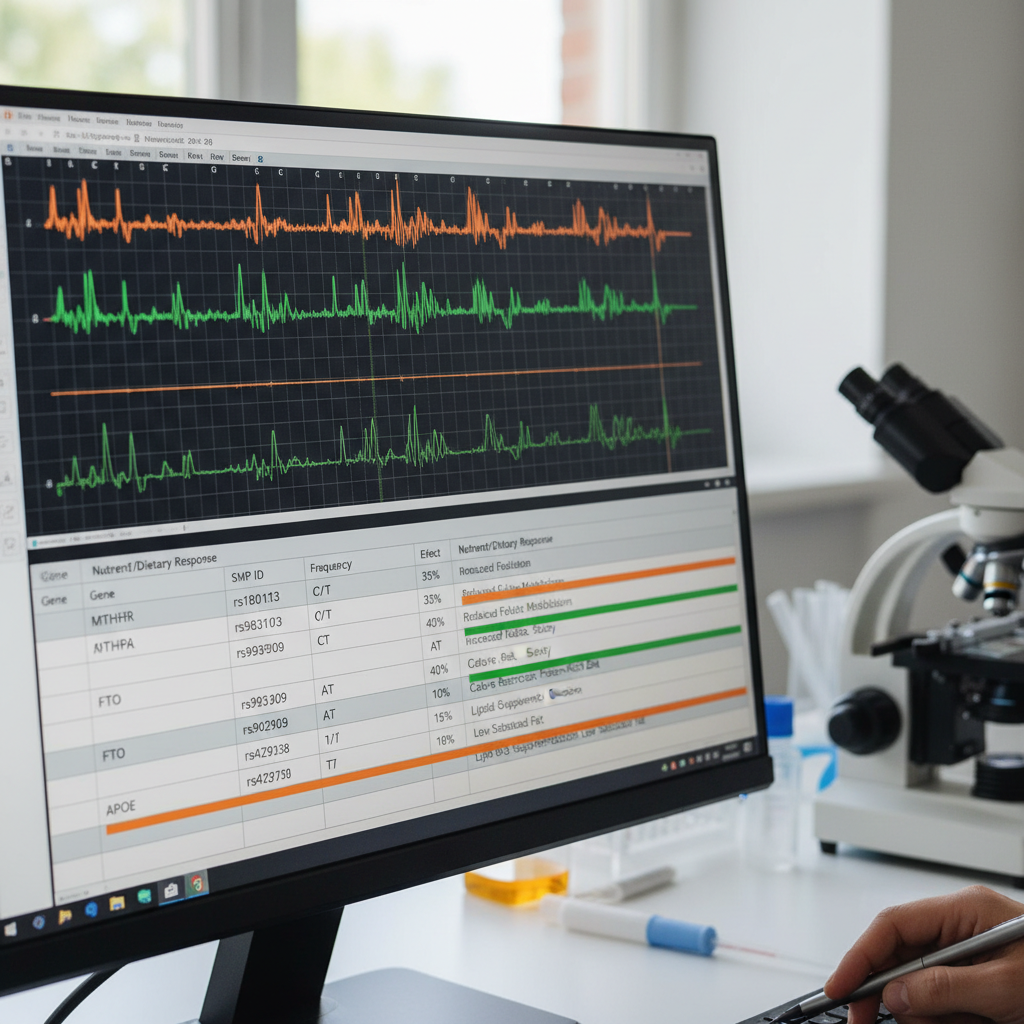
MTHFR (C677T, A1298C) variants impair folate metabolism and methylation, increasing homocysteine and risk of cardiovascular disease, neural tube defects, and mood disorders. APOE genotype determines fat metabolism and Alzheimer's risk — APOE4 carriers require lower saturated fat and higher omega-3 intake. FTO variants influence appetite regulation and obesity risk. FADS1/FADS2 variants affect conversion of plant omega-3 (ALA) to EPA/DHA, determining whether dietary fish oil or algae-based DHA is required.
Nutrient-Gene Interactions
Nutrients act as epigenetic modulators — activating or silencing genes through methylation, acetylation, and other modifications. Folate, B12, choline, and betaine provide methyl groups for DNA methylation. Sulforaphane (from broccoli sprouts) activates Nrf2 antioxidant genes. Resveratrol activates SIRT1 (a longevity gene). Curcumin inhibits NF-κB inflammatory gene expression. These nutrient-gene interactions explain why food is medicine — and why the same food affects different people differently.

Clinical Application
A nutrigenomic panel typically analyses 50–100 SNPs across pathways including methylation (MTHFR, MTR, MTRR), detoxification (GSTP1, CYP1A2), inflammation (IL-6, TNF-α, COX-2), lipid metabolism (APOE, APOC3, LPL), and vitamin metabolism (VDR, GC, DHCR7). Results guide personalised supplementation protocols — for example, MTHFR C677T homozygotes require methylfolate (not folic acid) and methylcobalamin (not cyanocobalamin).
- MTHFR C677T/A1298C — methylation capacity and folate metabolism
- APOE ε2/ε3/ε4 — fat metabolism, cardiovascular and Alzheimer's risk
- FADS1/FADS2 — omega-3 conversion efficiency
- VDR (BsmI, FokI, TaqI) — vitamin D receptor sensitivity
- GSTP1 — glutathione S-transferase detoxification capacity
Key Takeaways
- 01MTHFR variants impair methylation and require methylated B vitamins, not synthetic forms
- 02APOE4 carriers require specific dietary fat modifications and higher omega-3 intake
- 03Nutrients act as epigenetic modulators, activating longevity and antioxidant genes
- 04Nutrigenomic panels guide truly personalised supplementation protocols