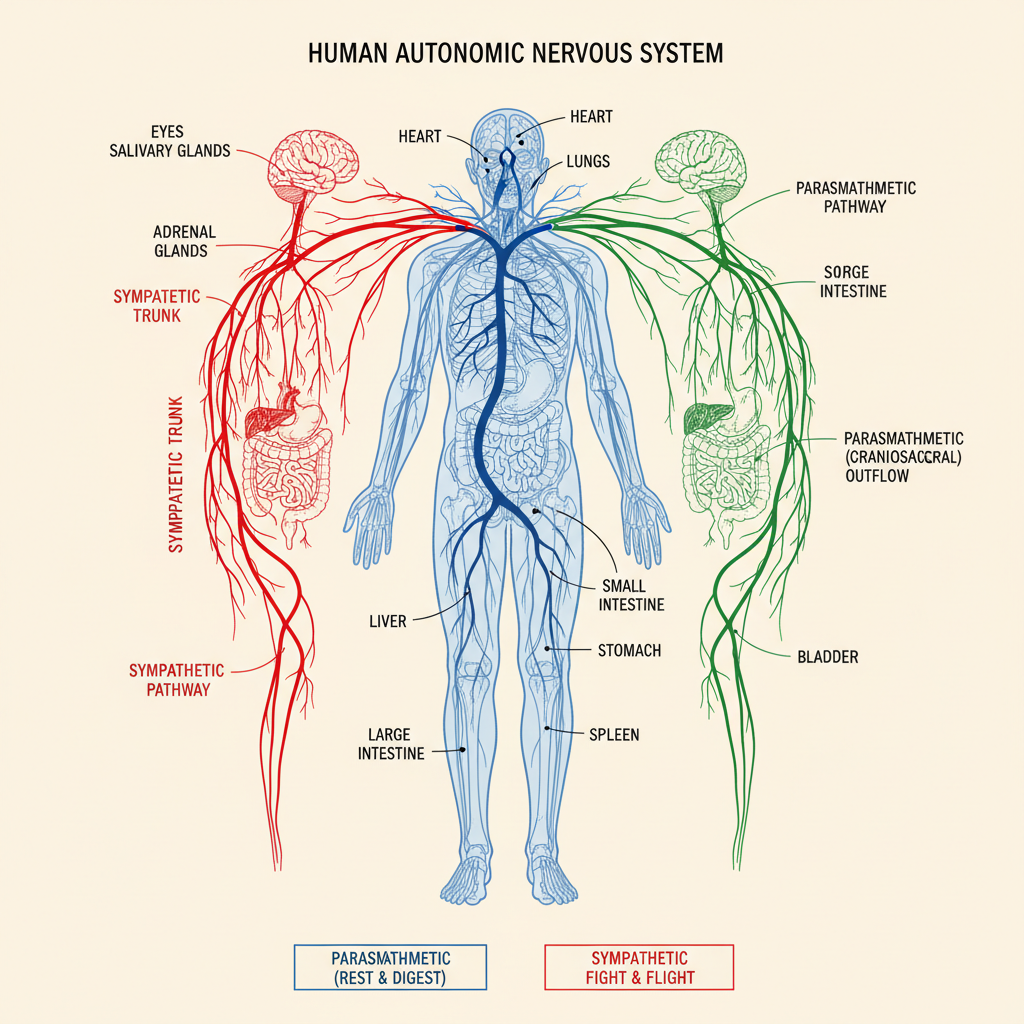
Developed by Dr Stephen Porges, Polyvagal Theory reframes our understanding of the autonomic nervous system — revealing how the vagus nerve governs not just digestion and heart rate, but our capacity for safety, social connection, and healing. Chronic sympathetic overdrive — the 'fight-or-flight' state — is now recognised as a root driver of inflammation, immune dysregulation, and metabolic disease.
The Three Neural Circuits
Polyvagal Theory describes three hierarchical circuits: the ventral vagal complex (social engagement, safety, calm), the sympathetic nervous system (mobilisation, fight-or-flight), and the dorsal vagal complex (immobilisation, freeze, shutdown). Under perceived threat, the nervous system cascades downward through these states — from social engagement to fight-or-flight to freeze. Healing requires ascending back to ventral vagal safety.

Sympathetic Overdrive and Chronic Disease
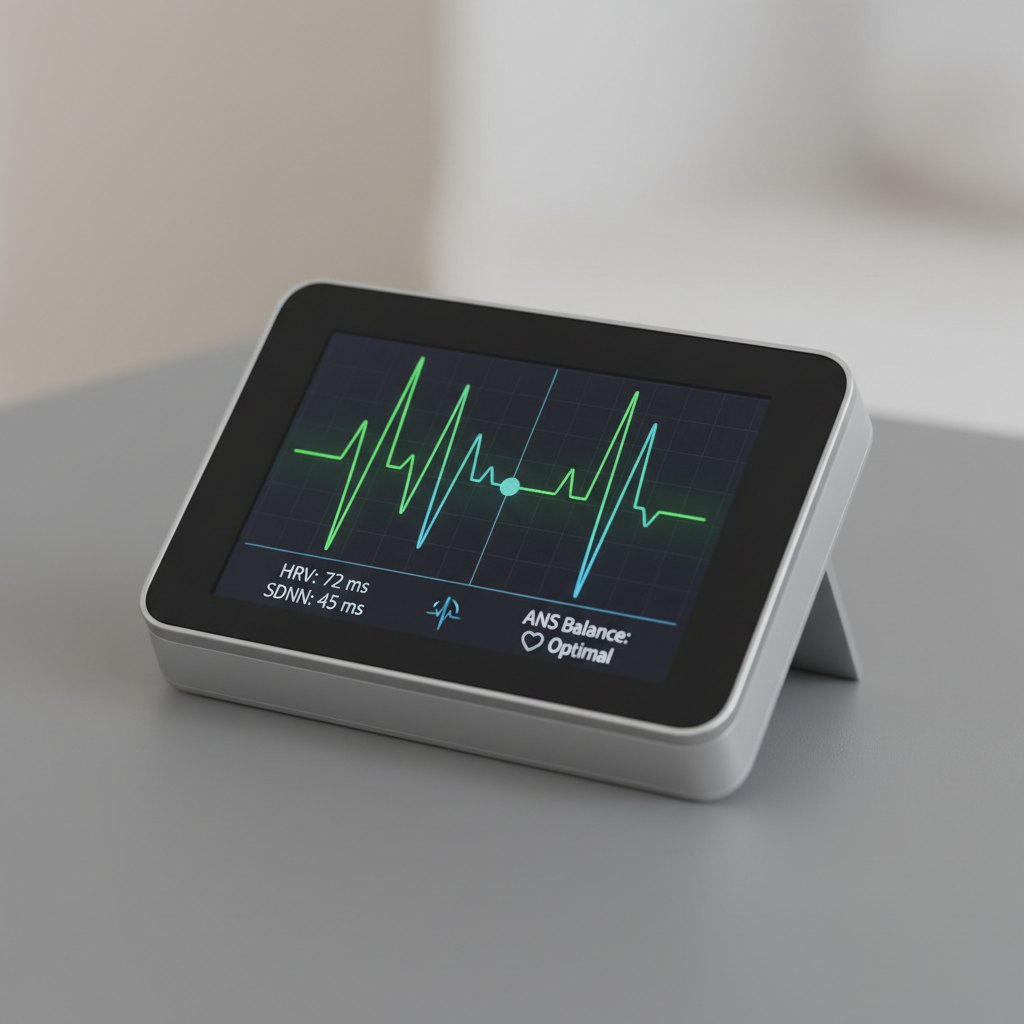
Chronic activation of the sympathetic nervous system elevates cortisol, adrenaline, and noradrenaline — suppressing immune function, impairing digestion, disrupting sleep, and driving systemic inflammation via NF-κB activation. HRV (heart rate variability) is the most validated clinical measure of autonomic balance: low HRV indicates sympathetic dominance and predicts cardiovascular disease, metabolic syndrome, and all-cause mortality.
Restoring Vagal Tone
Evidence-based interventions to restore ventral vagal dominance include slow diaphragmatic breathing (4–6 breaths/min), cold water immersion, humming and chanting (stimulates vagal afferents), social connection, and somatic therapies such as EMDR and SE (Somatic Experiencing). Pharmacological support may include low-dose naltrexone and adaptogens such as ashwagandha and rhodiola.
- Slow breathing (4–6 breaths/min) — most accessible vagal nerve stimulator
- Cold exposure — activates the diving reflex and vagal tone
- HRV biofeedback — real-time training of autonomic balance
- Somatic therapies (SE, EMDR) — resolve stored trauma patterns
- Social engagement — co-regulation via the ventral vagal circuit
Key Takeaways
- 01Three autonomic circuits govern safety, mobilisation, and shutdown responses
- 02Chronic sympathetic overdrive drives inflammation, immune suppression, and metabolic disease
- 03HRV is the most validated biomarker of autonomic nervous system health
- 04Slow breathing, cold exposure, and somatic therapies restore vagal tone